

Know your agency, assignment and limits
Learning objective: Confirm your duties, permitted areas and help contacts before starting.
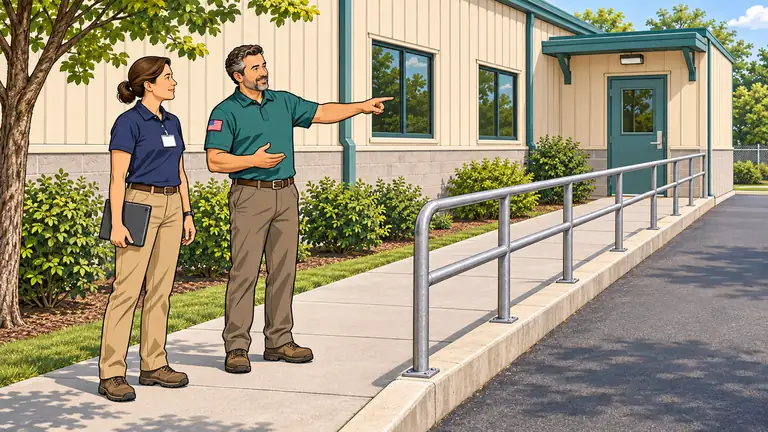
Public service includes many different jobs
Sector 92 covers government administration, oversight, justice, public safety and national defense. A public employer can also run a school, hospital, utility or other operation classified in another sector. Government ownership alone does not put every workplace in Sector 92. Choose the setting closest to your assignment; the five paths overlap and are not official industry divisions.
Start with the work you will actually do
An office title, agency badge, inspection assignment or public request does not establish training for every task nearby. Confirm the job, permitted rooms and routes, equipment limits, supervisor and backup contact. Temporary staff and contractors need a clear handoff between their employer and the agency host. A volunteer role also needs clear duties, preparation and limits.
Find the safety program that applies
Federal civilian agencies have agency safety programs; applicable federal requirements include training for the actual job and employee rights and responsibilities. State and local government coverage depends on the jurisdiction, including OSHA-approved State Plans and other state laws. Tribal government, military, contractor and volunteer circumstances need their own review. Ask which agency program and protections apply to your assignment. This course does not determine anyone’s legal status.
Practice the boundary
Before an unfamiliar task, ask the responsible person to explain the hazards, show the safe method where needed, and confirm what you may do. Explain the limits back in your own words. If the usual supervisor is away, use the named backup. In immediate danger, move to safety and get emergency help without waiting for routine approval.
Keep qualifications separate
This is a general worker-safety overview for Public Administration. It does not replace the agency safety program, employer or host instruction, or training for the actual task. It does not qualify law enforcement, corrections, firefighting, EMS, emergency dispatch, incident command, military operations, inspections, clinical care, equipment operation, electrical work or hazardous-material response. Required licenses, credentials, youth-work limits, exposure programs, driving, first aid, CPR, AED and specialized preparation remain separate. This is not FEMA, NIMS or ICS certification. The quiz and worksheet grant no occupational credential, specialized task qualification, entry permission or work authorization.
Words you can use
“I can complete the desk assignment. The field entry is new to me. Who will confirm the route, training and permission before I go?”
Source context: See the U.S. sources linked in the course resources