
The Jenkins Report
Weekly workplace safety updates across America
Jenkins Academy of Applied Technology
Toledo tanker release prompts evacuations and shelter-in-place orders
A chemical release in north Toledo prompts protective actions and continuing environmental monitoring.
A glycidyl methacrylate release from a tanker at MC Tank Terminal began October 20. Evacuations followed that night, and a three-mile shelter-in-place area was ordered early the next day. The release was stopped by October 22, and the evacuation zone ended October 23.
In its October 26 update, the City of Toledo said EPA testing along a route on October 24 found extremely low levels, below reporting and screening levels. Follow-up monitoring found no further detections on that route. EPA and Ohio EPA continued monitoring and overseeing the site. The city said available site data were preliminary and had not completed quality-assurance review.
Practical check. During an incident, who has authority to change protective actions, and how does the latest verified information reach workers and nearby residents?
NIOSH spotlights lead exposure in battery work
A new October 26 bulletin says nearly 90% of adults with known lead exposure in recent ABLES program data were exposed at work.
It also summarizes a battery-recycling health hazard evaluation that found lead on sampled work surfaces and workers’ skin, with concerns about ventilation and take-home contamination. This is research guidance, not a new regulation.
NIOSH Science Bulletin · October 26 ↗Philadelphia cleanup begins contaminated-slag removal
Crews began excavating about 68,000 cubic yards of contaminated slag and soil at the Franklin Slag Superfund site. EPA says the work uses dust suppression and five continuous air monitors; as of its October 22 update, the monitors had not recorded particulate exceedances from site operations.
The material will be treated and stabilized before transport to a permitted disposal facility. Work is expected to continue through 2029.
EPA cleanup update · October 22 ↗Mining fatality snapshot records 30 deaths
MSHA’s October 27 daily report lists 30 fatalities chargeable to the mining industry in 2026 to date. Its classifications include nine powered-haulage deaths, five machinery deaths and five slip-or-fall deaths. This is an October 27 data snapshot, outside the October 20–26 news window; it is not a claim that all these deaths occurred this week. Practical check. Review how people are separated from moving equipment and how maintenance work controls unexpected movement.
MSHA daily fatality report ↗Railroad-response HOS exemption renewed with limits
FMCSA renewed and modified a limited hours-of-service exemption for covered railroad-response drivers. Effective October 20, 2026 through October 18, 2030, the decision limits eligible unplanned events, adds reporting requirements and restricts use to drivers operating for carriers listed in its appendix. It covers specified 14-hour and 60/70-hour prohibitions; it is not general relief for all carriers. Practical check. Confirm the listed carrier, qualifying event and every condition before using the exemption.
Federal Register final decision ↗Airlines fined over restricted-airspace codeshare flights
DOT announced $105,000 in fines against Air France and $320,000 against KLM for flights carrying Delta’s code through FAA-prohibited airspace. DOT says foreign airlines using a U.S. airline’s code must observe the applicable restrictions. Both carriers were ordered to cease and desist from future violations. This is a new enforcement action concerning earlier flights, not a new aviation accident. Practical check. When work crosses organizational boundaries, verify which operating restrictions follow the activity.
DOT enforcement announcement ↗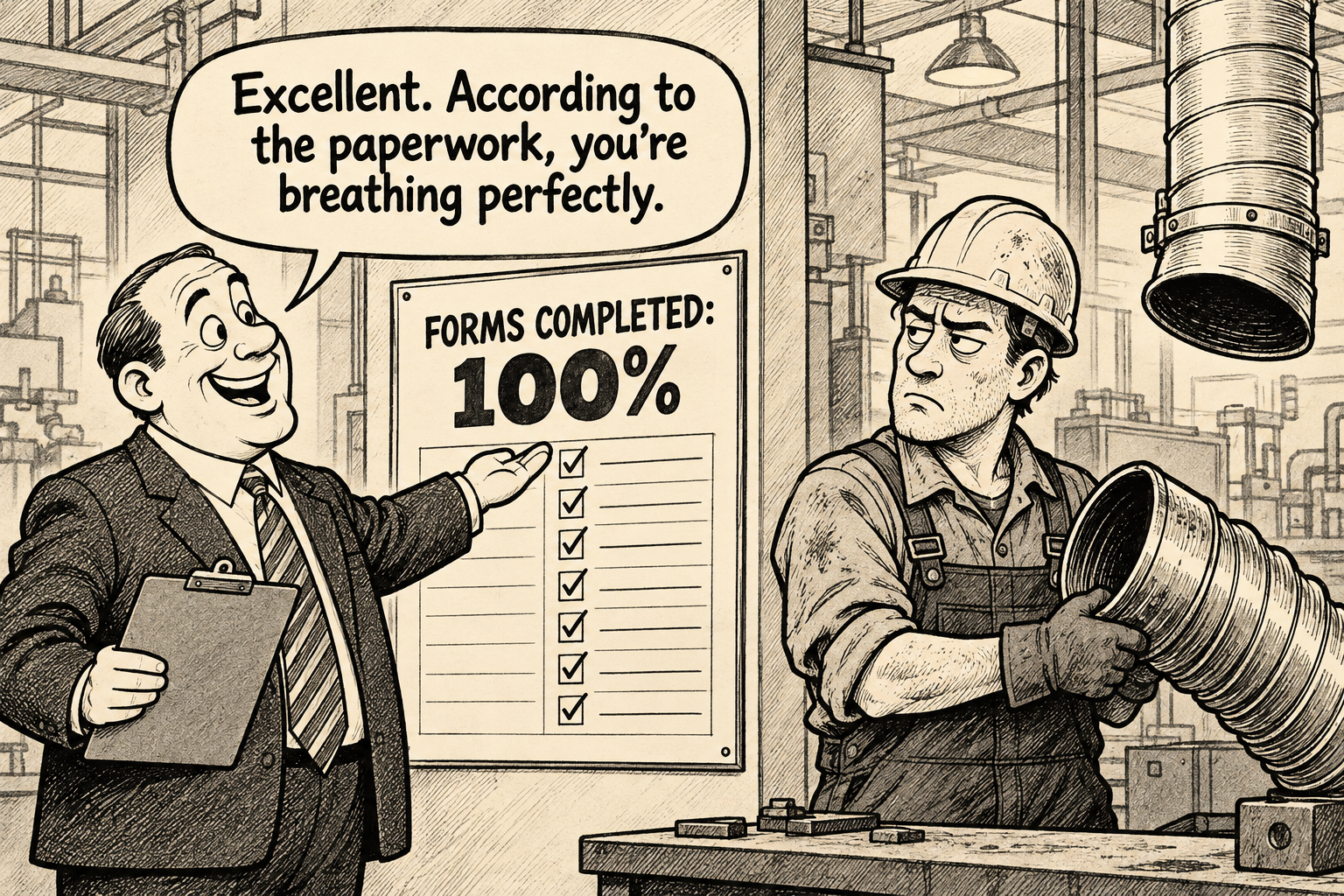
Editorial practical check
What tells you the protection is working?
Pick one task with the potential for severe harm. Ask the people doing it what could make the protection unavailable, how they would notice, and who can pause the work while conditions are checked.
Source review: October 28, 2026. This edition covers new developments in the October 20–26 reporting period. Editorial practical checks are discussion prompts.