A Company Before It Knows What It Is
In the current opening, the travelers have agreed to walk in the same direction.
That agreement does not settle much.
A name might make them sound organized.
An official charter might make it easier to find paid work.
Neither fills an empty purse.
They can discuss future rewards, but someone still has to decide how expenses will be paid and how risks will be shared.
These are small concerns beside the dangers we usually associate with fantasy.
They are also useful ways to meet people.
Who speaks confidently about a plan?
Who notices what the plan leaves out?
Who expects everyone to contribute?
Who wonders whether the person volunteering someone else for danger has thought the arrangement through?
A company becomes interesting when its members have different answers.
Meet Jinx
Jinx brings a practical eye to the opening.
She cares about payment, fair shares, and the difference between what someone promises and what they can deliver.
She is also attentive to people.
Her background includes a father's tailoring business, where reading a customer and keeping a conversation moving were useful skills. Those habits travel with her.
She notices what others say.
She notices what they avoid saying.
And she is willing to question a conclusion that everyone else seems ready to accept.
Her concern for money does not answer every question about what she will do when someone needs help.
That is part of what makes her worth following.
A person can have a practical motive and still face a choice that reaches beyond it.
Different People, the Same Road
Kaelor watches the ground and the spaces beside the road.
Stonebreaker brings confidence, laughter, and enthusiasm for what might lie ahead.
Their presence changes the group in different ways.
Someone who knows how to read a trail can help everyone decide where to go.
Someone who makes a doubtful plan sound possible can get people moving.
But those strengths also raise questions.
What does the evidence actually show?
What has enthusiasm encouraged everyone to overlook?
Who is listening when the quieter person speaks?
I want the company to grow through these interactions.
The travelers do not need to explain their entire lives at their first meeting. Their habits, disagreements, and responses give us places to begin understanding them.
There is room to learn more as they learn more about one another.
The First Problem Is Someone Else's
The opening turns on a child's appeal.
His friend is missing.
The travelers were looking for work. Now they have to decide what help they can offer and what they need to know before acting.
A frightened person may be certain that something terrible has happened.
A trail may suggest a direction without explaining what waits at its end.
The group may have weapons without having enough information to know how to use them.
Those differences matter.
Concern does not guarantee understanding.
Confidence does not guarantee a good decision.
The search begins to reveal what each traveler notices, what each assumes, and what each is prepared to risk.
You can meet a company through the way it responds to someone who has very little to offer in return.
Room for Humor
A dangerous journey can still contain laughter.
Travelers argue about names.
Someone adjusts a badly arranged pack again.
A confident suggestion receives an inconvenient question.
Humor can reveal affection, irritation, discomfort, or an attempt to keep moving when nobody feels especially certain.
The campaign accounts preserve distinctive voices. That is something I want the novel to carry forward.
People who face danger together do not stop having personalities.
Their jokes can help us understand what they are afraid to say plainly.
Their disagreements can show how far they still have to go before they trust one another.
From the Table to the Page
A campaign record and a novel do different work.
At the table, an uncertain outcome can become memorable because everyone experienced the decision together.
On the page, a reader needs enough context to understand why the decision matters.
Who wants something?
What do they know?
What do they misunderstand?
Why does another person resist their plan?
The player accounts help preserve how characters experienced events. Developing the novel means shaping those events into scenes that a reader can follow.
Dialogue, movement, pacing, and the space between consequential moments all need attention.
The choices and relationships that made the campaign worth remembering remain central to that work.
A World People Have to Live In
Kharadorn's development gives those journeys an original world of their own.
A road needs somewhere to lead.
Paid work needs people who can offer it.
A charter needs an authority whose recognition means something.
A character's faith needs a place in the life they lead.
These details matter when they affect the people in the story.
They can shape who is trusted, what help is available, and what a decision costs.
This connects with the approach I explore in The World Beyond the Adventure: ordinary life gives the larger adventure something to reach into.
It also connects with Give the NPC a Life. A person becomes easier to remember when we can recognize something beyond the function they perform.
An Invitation to the Journey
Legends of the Unbroken remains a work in development.
As I share more, I want you to meet its people and discover the world through the decisions that bring them together.
For now, the invitation is simple.
Imagine a company with more confidence than coin.
A road they expected to follow.
And a request that gives them a reason to stop.
They have not yet settled what kind of company they will become.
Their next choice will begin to answer.
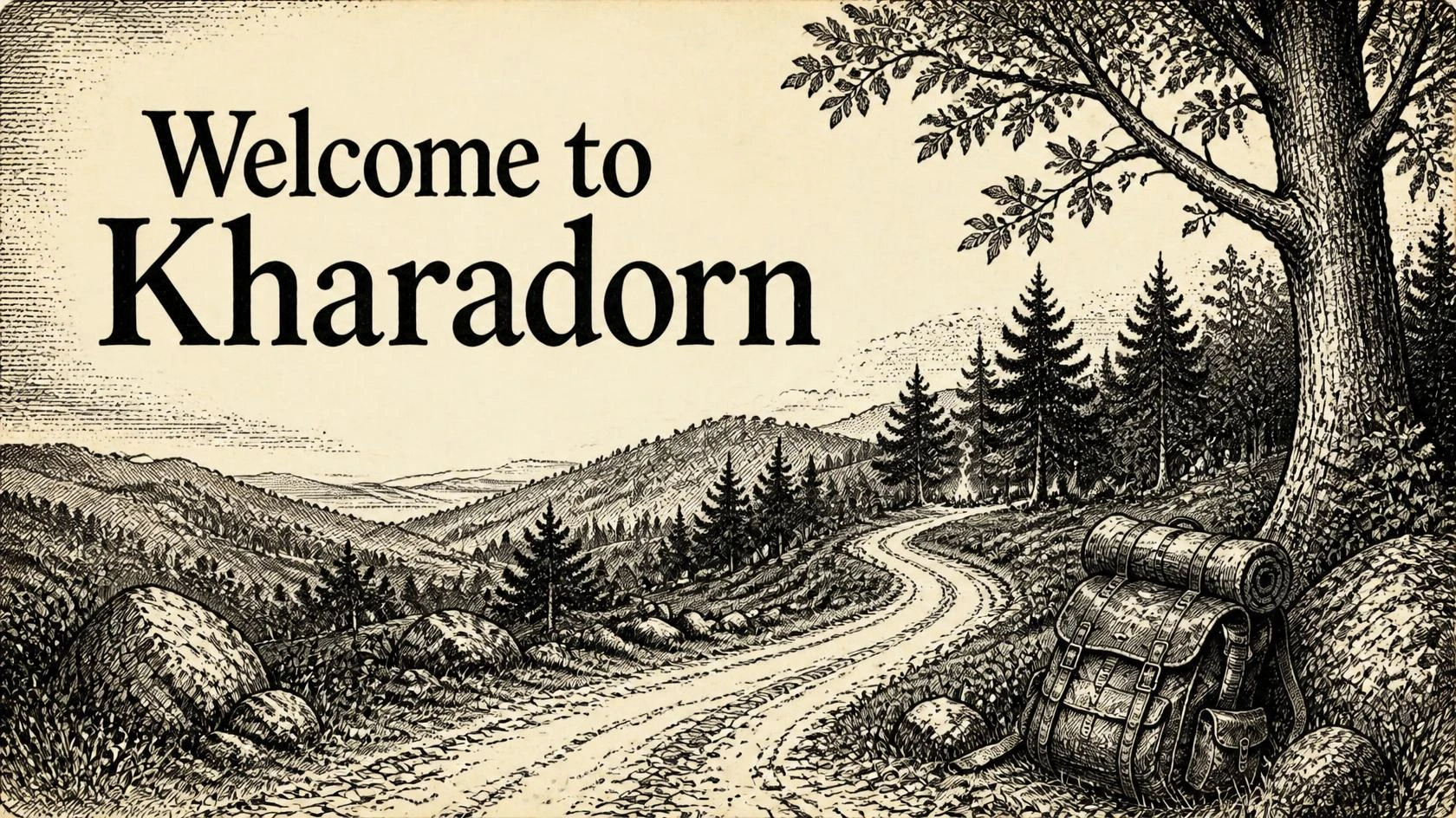
Welcome to Kharadorn.
END OF