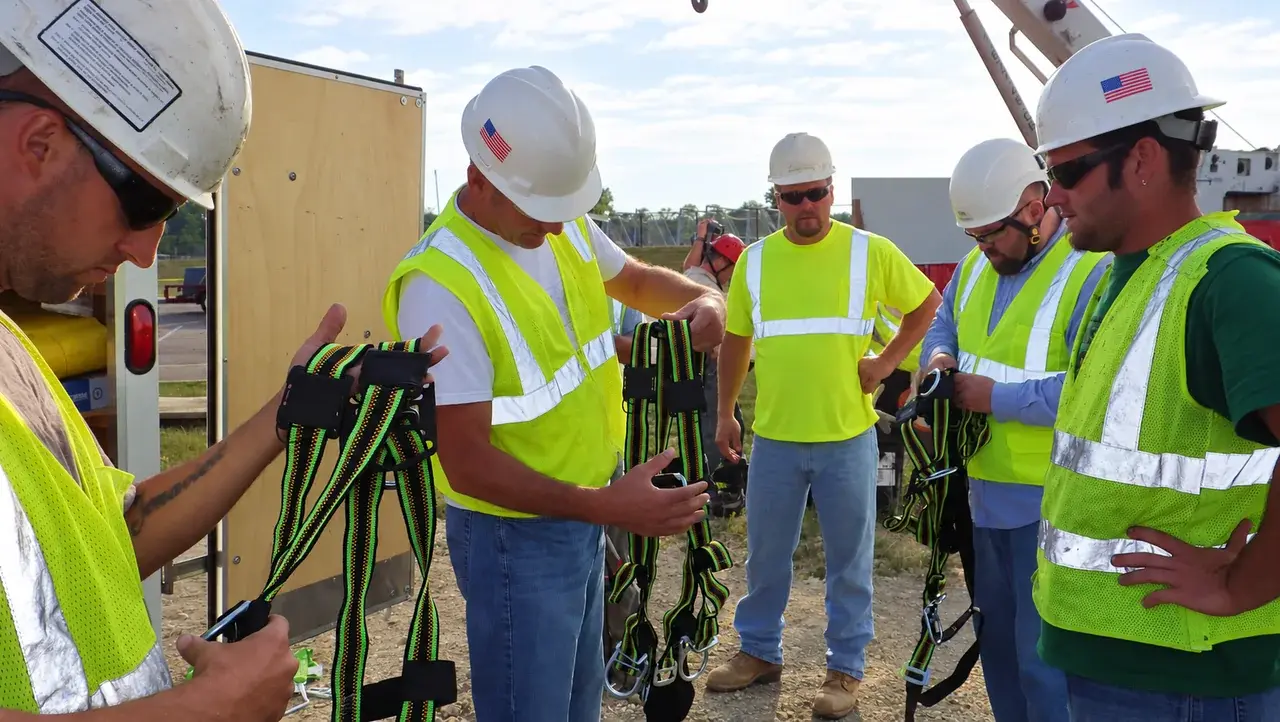
Workplace learning in practice · Retouched photograph
About the school
How do we help adults learn and apply what they learn?
Begin with the learner and the work, then connect outcomes, practice, feedback and application.
Learning at work has a purpose. People need to understand something, make a decision or develop a capability they can use. Practice and feedback help them explore how to use it; the tools, instructions and conditions at work matter too.
This school is for trainers, facilitators, supervisors and people creating workplace learning. It also welcomes people who want to help others understand and apply ideas. Begin with a lesson, conversation or capability you want to make more useful.
Areas of study
Start with the learner. Connect learning to work.
Explore learning needs, purposeful design, participation, assessment and the conditions that support application.
01
Adult learners
Start with experience and relevance.
People bring prior knowledge, questions and different learning needs. Explore what they already understand, why the learning matters to them and what helps them participate. Avoid assuming every adult learns in the same way.
02
Learning needs
Understand the gap before designing training.
Ask what people need to understand or do and what is preventing it. Training may be part of the response. Missing resources, unclear instructions or work conditions may also need attention.
03
Learning design
Build a purposeful experience.
Connect the learning goal to explanations, examples, practice and feedback. Choose activities that help people reason or perform, rather than adding content simply to make a lesson longer.
04
Facilitation
Support conversation and participation.
Use questions, discussion and reflection to help learners make sense of an idea. Consider language, literacy, accessibility and the practical setting so people can participate meaningfully.
05
Assessment
Choose evidence that fits the goal.
A quiz can show how someone answers knowledge questions. A demonstration can provide different evidence about practical performance. Ask what the assessment actually supports before treating completion as proof of capability.
06
Transfer and improvement
Help learning become useful at work.
Explore what supports application after the lesson: usable instructions, suitable tools, opportunities to practice and helpful feedback. Study the experience of learners and revise the learning or working conditions as needed.
Programs & courses
Design learning with purpose.
Explore research literacy, trainer development and the planned instructional-design pathway. Current course and program information is available to browse; formal enrollment remains closed.
Researcher Training · Not open for enrollment
JAAT-101 — Research Literacy and the Research Lifecycle
Noncredit professional training in research literacy, the research lifecycle, evidence appraisal, question formation, research approaches, and responsible next steps.
The program prepares instructional designers to create accessible, evidence-informed learning for technical, occupational, professional and organizational settings. Applied work may include the development of real training for Jenkins Academy of Applied Technology schools and programs while building skills that transfer across industries and disciplines.
The diploma is built from four stackable Professional Certificates. Each certificate develops a distinct area of professional practice and contributes toward the complete diploma. Program enrollment is not yet open.
Certificate
Certificate in Workplace Training & Trainer Development
Develop practical workplace trainers who can design useful learning, guide practice, assess demonstrated performance, and coach the next trainer.
Develop the practical skills to analyze learning and performance needs and design, develop, assess, evaluate and continuously improve adult learning and workplace training.
Understand adult learning, workplace performance, learning objectives and curriculum alignment.
6 Learning Credits
Instructional Analysis & Design
Analyze learning needs and translate them into defensible courses, curricula and instructional strategies.
6 Learning Credits
Learning Development & Digital Instruction
Develop instructional content, digital learning experiences and accessible LMS-ready training.
6 Learning Credits
Assessment, Evaluation & Learning Quality
Design assessments, evaluate learning effectiveness and apply instructional quality and continuous-improvement practices.
6 Learning Credits
Instructional Design Practicum & Capstone
Apply the complete instructional-design process to a real learning or performance need—from analysis and design through development, assessment, quality review, evaluation and improvement.
6 Learning Credits
Jenkins Academy of Applied Technology Learning Credits are an internal measure of documented learning scope and learner engagement. They are not currently academic semester credits, transferable college credit or CEUs.
Everyone passes a refresher, but the same preparation difficulty continues at the workstation. A learner explains that the lesson shows equipment the team does not have.
Explore a fictional workplace conversation and consider what the trainer should examine before assigning more training.
Explore the workplace example: The Lesson Everyone Passed
Understand how adults learn and how to design, deliver and improve workplace learning.
Free to explore · No account needed for this introduction
DISCOVER THE SCHOOL
How do we help adults learn and apply what they learn?
Welcome film not available. Read the complete welcome here.
A SHORT INTRODUCTION · ABOUT 5–10 MINUTES
Welcome to Adult Learning & Training
Welcome to the School of Adult Learning & Training.
Learning at work has a purpose. People need to understand something, make a decision or develop a capability they can use.
A lesson can explain an idea. An example can make it clearer. Practice and feedback help people explore how to use it. But the story continues when they return to work. Do the instructions, tools and conditions support what they learned?
This school explores adult learners, learning needs, design, facilitation, assessment and application. We begin with the people learning and the work they are trying to do.
You will meet a team that passes a refresher quiz but still encounters the same difficulty at its workstation. Try one decision, explore the school's subjects and choose a resource that fits your question.
Start here: how do we help adults learn and apply what they learn?
THE FIELD
What we explore
Begin with the learner and the work, then connect outcomes, practice, feedback and application.
Who this school is for
This school is for trainers, facilitators, supervisors and people creating workplace learning. It also welcomes people who want to help others understand and apply ideas. Begin with a lesson, conversation or capability you want to make more useful.
Trainers and facilitatorsSupervisorsPeople designing workplace learning
TRY THE PERSPECTIVE
A familiar workplace moment
A fictional situation. One choice. A glimpse of how this school approaches a workplace question.
Fictional workplace example
The Lesson Everyone Passed
The team completes a refresher on preparing its workstation for a routine task. Everyone passes the quiz. The same preparation difficulty still occurs. When Elena asks Noor to explain the task, she learns that the lesson shows an adjustable fixture that the team's workstation does not have. The written instructions refer to that fixture too.
NoorEmployee and learner
ElenaWorkplace trainer
BenSupervisor
BEN: "Everyone passed the refresher, but the same problem keeps coming back. Should we assign it again?"
NOOR: "I understand the lesson. It tells us to adjust the fixture shown in the example. Our station does not have that fixture."
ELENA: "Let's look at the actual task together before choosing another training response."
What should Elena examine first?
ELENA: "Let's compare the learning goal and instructions with the workstation. We need to identify what requires a work-design decision and what needs to change in the lesson."
BEN: "I will get the appropriate support for the equipment and preparation question. We should not ask the team to improvise around it."
NOOR: "I can explain where the instructions stop matching the work. That will help you build a useful example."
The quiz result provided one kind of information. Noor's experience provided another. By examining both, the group could identify a mismatch that repeating the course would not resolve.
The next step is to address the work question through the appropriate process, then align the learning with the intended task and provide suitable practice. Learner feedback helps the group study whether the changes are useful.
YOUR NEXT STEP
Start with a question that matters to you
JAAT 101 is a noncredit professional course in research literacy and responsible research practice.
Not open for enrollment
JAAT-101 · Research Literacy and the Research Lifecycle
JAAT 101 introduces research literacy, evidence appraisal, question formation, research approaches, and responsible next steps. The course is for Jenkins-affiliated researchers and independent learners.
Explore a current Academy course to see how guided explanations, decisions and written practice connect to a practical subject. This is task-analysis learning, not a qualification in training design.
Explore how planning, protection, systems, learning and technology connect.
Occupational Safety examines exposures and protection. Safety Leadership explores the decisions and conversations that support people. Applied Systems Studies examines relationships, constraints and feedback. Applied AI & Technology explores useful technology, verification, and human oversight. Adult Learning & Training connects these perspectives by asking how people develop understanding and apply it in their work.
Think of something you want to help another person learn. What should they be able to explain, decide or do? What practice would help? What will support them when they use it?
Begin with that need, then choose a resource or learning experience that helps you explore it. Welcome to the School of Adult Learning & Training.
Research & ideas
Study the learning. Question the evidence.
Related reading on adult learning, knowledge sharing and research applicability from Jenkins Industry Safety Journal, a publication of Jenkins Research Institute.
A revised critique examines adult participation, hazard recognition and training evaluation while separating promising observations from demonstrated safety outcomes.
An applied analysis examines why crew knowledge may not travel, how mentoring and work conditions interact, and what evidence can test proposed improvements.
Judge whether safety research fits your workplace by checking study validity, people, conditions and outcomes, with a worked example and practical checklist.