Download the talk and separate crew records
Free to download without an account. Each PDF is one page. Use the Word version to adapt the record to your task and approved procedures.
Supervisor field check
Download supervisor field check (PDF, 1 page)Editable supervisor field check (Word)Preview the one-page crew talk
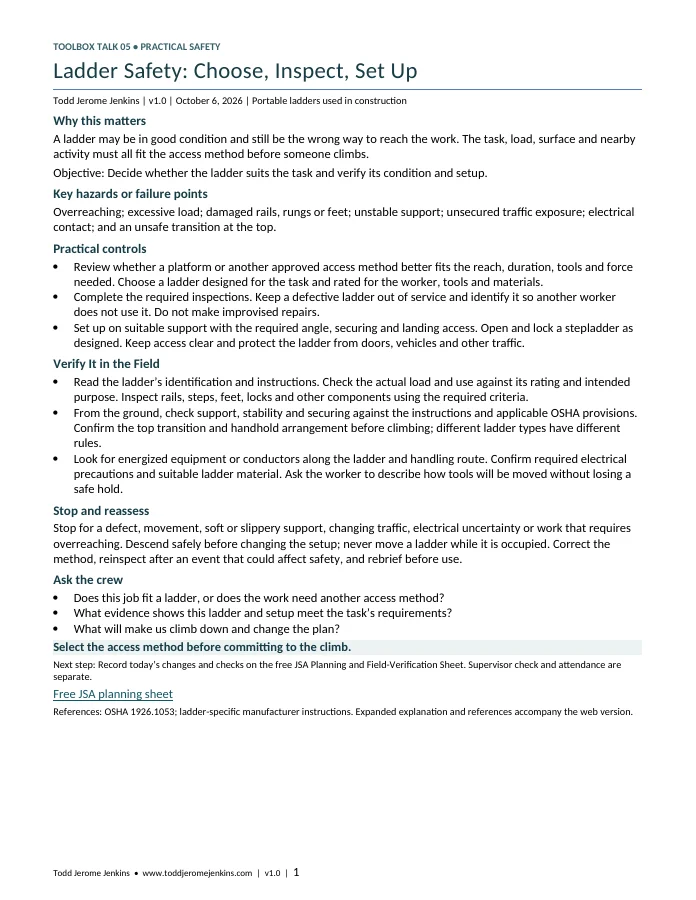
One-page crew talk, with separate supervisor and attendance sheets. Plan a 5–10 minute discussion and allow the time needed for field verification. All downloads are free; no account is required.
Learning objective
Decide whether the ladder suits the task and verify its condition and setup.
Start with today’s work
Illustrative scenario: A short job becomes repeated drilling that requires side force and two-handed work. The ladder has no visible defect, but the method no longer fits. Stop and choose an approved access arrangement that supports the task. Repeatedly reminding the worker not to lean does not resolve an unsuitable work position.
Key hazards or failure points
Overreaching; excessive load; damaged rails, rungs or feet; unstable support; unsecured traffic exposure; electrical contact; and an unsafe transition at the top.
Practical controls
- Review whether a platform or another approved access method better fits the reach, duration, tools and force needed. Choose a ladder designed for the task and rated for the worker, tools and materials.
- Complete the required inspections. Keep a defective ladder out of service and identify it so another worker does not use it. Do not make improvised repairs.
- Set up on suitable support with the required angle, securing and landing access. Open and lock a stepladder as designed. Keep access clear and protect the ladder from doors, vehicles and other traffic.
Verify It in the Field
- Read the ladder’s identification and instructions. Check the actual load and use against its rating and intended purpose. Inspect rails, steps, feet, locks and other components using the required criteria.
- From the ground, check support, stability and securing against the instructions and applicable OSHA provisions. Confirm the top transition and handhold arrangement before climbing; different ladder types have different rules.
- Look for energized equipment or conductors along the ladder and handling route. Confirm required electrical precautions and suitable ladder material. Ask the worker to describe how tools will be moved without losing a safe hold.
For each required control, identify the acceptance source and safe check method, assign a person with the required competence and authority, and record the actual result and time. Use VERIFIED, HOLD/NOT VERIFIED, or N/A with a reason. A checkmark alone does not demonstrate that protection works.
| Control | Safe verification | Criterion, evidence and response |
|---|---|---|
| Load and intended use | Compare worker, tools and carried materials with the ladder label; check whether the task matches the design. | 1926.1053 and model instructions. Record ladder ID and selection basis; missing rating or unsuitable use means HOLD. |
| Ground and traffic | Check both supports and the traffic/door control arrangement without climbing into an unverified setup. | 1926.1053(b) and site plan. Record setup location and deficiencies; relocate or secure as required before use. |
| Landing transition | Verify rail extension or the specified alternative arrangement and clear access before climbing. | 1926.1053(b)(1). Record the actual arrangement; do not invent an alternative. |
These are examples, not a complete task inspection. Check all required controls. Do not enter danger, defeat a safeguard or improvise a test. If the criterion, method or result is uncertain, hold affected work and get the appropriate technical help. No actual equipment model, product SDS or site permit was supplied for these examples; use the documents for your task.
Leader preparation and explanation
Do not apply one setup rule to every ladder
For a non-self-supporting ladder covered by 1926.1053(b)(5)(i), the horizontal distance is approximately one quarter of the working length of the ladder. That is not a rule for setting a stepladder against a wall. Follow the provision for the ladder type and its instructions.
Check the upper landing arrangement
For portable ladders accessing an upper landing, 1926.1053(b)(1) generally requires side rails at least three feet above the landing. If that extension is not possible because of ladder length, the standard specifies securing the top to rigid support and providing a grasping device. Do not treat an improvised handhold as an automatic substitute.
Inspection and use are different checks
The standard requires competent-person inspections periodically and after an occurrence that could affect safe use. A task check must also establish suitable support, load, securing, electrical precautions and safe access. Keep the top and bottom clear. Use the ladder as designed; a top step marked against standing is not extra reach.
Stop and reassess
Stop for a defect, movement, soft or slippery support, changing traffic, electrical uncertainty or work that requires overreaching. Descend safely before changing the setup; never move a ladder while it is occupied. Correct the method, reinspect after an event that could affect safety, and rebrief before use.
When conditions change, return to Pre-Job JHA/JSA: What Changed Today? and revise the affected task plan with the crew.
Three crew discussion questions
- Does this job fit a ladder, or does the work need another access method?
- What evidence shows this ladder and setup meet the task’s requirements?
- What will make us climb down and change the plan?
Short supervisor field check
- Chosen access method fits the reach, work duration, forces, tools and materials.
- Ladder identity, intended use and load rating match the actual task.
- Required inspections are complete; defects are tagged and the ladder removed from use.
- Support, angle, securing, traffic protection and upper access meet the applicable criteria.
- Electrical exposure, tool handling and the worker’s climbing method are addressed.
Use the separate supervisor sheet to record the task and change, JHA/JSA revision, acceptance source, safe method, verifier, actual result, unresolved items, corrective action, recheck and required restart authorization. Link specialist inspection records rather than copying private or unnecessary details.
Attendance and follow-through
Use the separate attendance sheet for participant names, roles and acknowledgment, meeting details, concerns, actions and rebriefs. Attendance is not proof of competence, functioning controls or permission to work. Keep completed records under the employer’s privacy and recordkeeping procedures; never post completed sign-in sheets publicly.
Related JHA/JSA resource and existing video
How to Conduct a Job Safety Analysis connects the task steps, hazards and controls. For related background, see At What Height Is Fall Protection Required?.
Related crew discussions
One next step
Use the free JSA Planning and Field-Verification Sheet to record today’s changes and checks with the crew.
Sources and references
Sources reviewed October 6, 2026. Apply each regulation’s industry and activity scope, and current state or local requirements where applicable. Guidance is identified separately. This discussion resource supports preparation; it does not replace task procedures, required training, permits or specialist decisions.
- OSHA 29 CFR 1926.1053 — Construction ladder design/use, upper access, setup, load, electrical precautions, inspections and defect removal.