Download the talk and separate crew records
Free to download without an account. Each PDF is one page. Use the Word version to adapt the record to your task and approved procedures.
Supervisor field check
Download supervisor field check (PDF, 1 page)Editable supervisor field check (Word)Preview the one-page crew talk
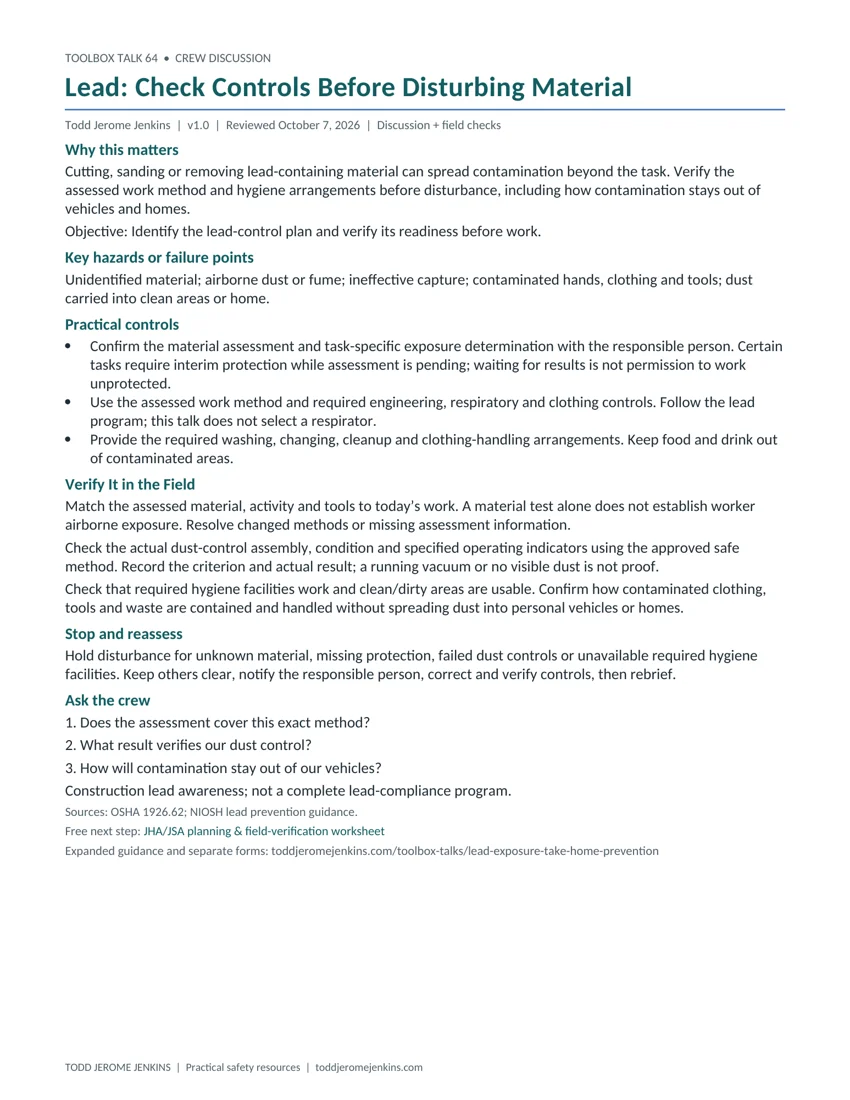
A 5–10 minute crew discussion, plus the time needed for field verification. All six downloads are free without a required signup.
Why this matters
Cutting, sanding or removing lead-containing material can spread contamination beyond the task. Verify the assessed work method and hygiene arrangements before disturbance, including how contamination stays out of vehicles and homes.
Learning objective: Identify the lead-control plan and verify its readiness before work.
Key hazards or failure points
Unidentified material; airborne dust or fume; ineffective capture; contaminated hands, clothing and tools; dust carried into clean areas or home.
Practical controls
- Confirm the material assessment and task-specific exposure determination with the responsible person. Certain tasks require interim protection while assessment is pending; waiting for results is not permission to work unprotected.
- Use the assessed work method and required engineering, respiratory and clothing controls. Follow the lead program; this talk does not select a respirator.
- Provide the required washing, changing, cleanup and clothing-handling arrangements. Keep food and drink out of contaminated areas.
Verify It in the Field
Match the assessed material, activity and tools to today’s work. A material test alone does not establish worker airborne exposure. Resolve changed methods or missing assessment information.
Check the actual dust-control assembly, condition and specified operating indicators using the approved safe method. Record the criterion and actual result; a running vacuum or no visible dust is not proof.
Check that required hygiene facilities work and clean/dirty areas are usable. Confirm how contaminated clothing, tools and waste are contained and handled without spreading dust into personal vehicles or homes.
Use the separate field check to record the acceptance source and criterion, safe method, checker, actual result and time. Mark VERIFIED, HOLD/NOT VERIFIED, or N/A with a reason. A checkmark alone is not evidence that protection works. Complete all required task checks; do not enter danger or improvise a test.
| Control | Safe verification | Evidence |
|---|---|---|
| Assessed task | Compare material, method and tools with the assessment. | Assessment reference and resolved changes. |
| Effective capture | Use the specified safe equipment check. | Criterion, indicator or result, verifier and time. |
| Clean transition | Check facilities and contaminated-item handling route. | Working facilities, restrictions and corrected gaps. |
Stop and reassess
Hold disturbance for unknown material, missing protection, failed dust controls or unavailable required hygiene facilities. Keep others clear, notify the responsible person, correct and verify controls, then rebrief.
Crew discussion questions
- Does the assessment cover this exact method?
- What result verifies our dust control?
- How will contamination stay out of our vehicles?
A situation to discuss
Illustrative situation: sanding replaces the removal method described in the plan. The crew holds the work because the new method can change exposure and control requirements. The responsible person reassesses before disturbance begins.
Leader preparation and practical detail
Separate material identity from exposure
Knowing lead is present helps identify the hazard. It does not by itself measure or adequately characterize worker exposure for the task. OSHA’s construction lead standard addresses exposure assessment and specified interim protections for certain activities. The responsible employer must resolve those duties before exposure. [1]
Verify the complete control arrangement
Check the tool, collection components, condition and specified performance indicators together. A generic HEPA label or vacuum sound does not validate the whole work method. Use the applicable assessment, equipment instructions and program records. Changes to material, equipment or process can require reassessment. [1]
Make the clean transition usable
A hygiene plan needs functioning facilities and a practical route from the contaminated work to clean clothing and personal belongings. NIOSH identifies prevention for workers and their families as part of reducing lead exposure. Required showers and changing facilities must not be treated as optional when the applicable rule requires them. Keep individual medical information out of crew records. [1, 2]
Short supervisor field check
- Material and task-specific exposure assessment addressed.
- Applicable interim protections confirmed before work.
- Engineering-control checks have acceptable results.
- Required respiratory and protective-clothing program ready.
- Hygiene, cleanup and contaminated-item handling verified.
Record unresolved items, restrictions, correction owner, recheck result and required restart authorization. Reference permits and specialist inspections rather than treating this form as a replacement. Rebrief workers affected by a change.
Attendance and follow-through
Use the separate attendance sheet for participants, discussion concerns, actions and late-arrival rebriefs. Attendance does not establish competence, verify controls or authorize work. Keep completed records private under the employer’s recordkeeping procedures.
Technical scope and references
Construction lead awareness based on 1926.62. Other metals and other industries have different requirements. Medical surveillance and respiratory selection belong to the applicable programs; symptoms are not an exposure test. [1, 2]
References reviewed October 7, 2026. Apply the industry, activity and jurisdiction that govern the work. No actual site permit, equipment manual, exposure assessment or engineering determination was supplied for this general discussion.
- OSHA 1926.62 — Lead in construction — Assessment, interim protection, controls, housekeeping and hygiene.
- NIOSH — Preventing work-related lead exposure — Worker, employer and family prevention guidance.
Connect this discussion to your JHA/JSA
Use How to Conduct a Job Safety Analysis to connect task steps, hazards and controls. Revisit Pre-Job JHA/JSA: What Changed Today? when conditions change.
Related crew discussions
- Hazard Communication: Labels, SDS & the Task
- Respiratory Hazards: Know What You’re Breathing
- Chemical Exposure: Verify the Help Before Use
- Pre-Job JHA/JSA: What Changed Today?
Put one check into practice
Use the free JHA/JSA planning and field-verification worksheet to record today’s changes, important controls and the evidence needed before exposure.